
James Harrison | York Heritage Capital
18/12/2024
Discover over 100 financial terms with straightforward definitions designed for both novices and experienced investors.
Are you perplexed by financial acronyms such as ACCC, ASIC, AFCA, or ASFA? Do you find it challenging to differentiate between a term deposit and a term account? You are not the only one. Money’s extensive glossary of financial terms and acronyms is available to assist you.
Whether you are analyzing a financial statement, evaluating super funds, or addressing a complaint, this guide simplifies both common and intricate financial terminology into clear and understandable language.
Account-based pension (ABP)
An account-based pension is a regular income stream purchased with superannuation savings, typically after retirement. It allows retirees to draw down their super while benefiting from investment earnings.
Accrued interest
Accrued interest is the interest that has accumulated on a loan or investment but has not yet been paid or received. It is commonly used in bonds and savings accounts to reflect earnings over time.
Administrative Appeals Tribunal (AAT)
The Administrative Appeals Tribunal (AAT) independently reviews decisions made by Australian government departments, agencies and ministers.
Afterpay
Afterpay is a buy-now-pay-later (BNPL) service that allows consumers to purchase items and pay for them in instalments over time. Other BNPL services include Zip, Klarna and Humm.
Amortisation
Amortisation refers to the gradual repayment of a loan over time through regular payments that cover both principal and interest. It also applies to the depreciation of intangible assets over their useful life.
Annual leave loading
Annual leave loading is an additional payment (usually 17.5%) made to eligible employees when they take annual leave. It compensates for the loss of potential overtime or penalty rates during leave.
Asset allocation
Asset allocation is the strategy of dividing investments among different asset categories, such as stocks, bonds, and cash. It aims to balance risk and reward based on an investor’s goals and risk tolerance.
Automatic teller machine (ATM)
An automatic teller machine (ATM) is an electronic banking outlet that allows customers to perform basic transactions without the need for a branch representative. Common functions include cash withdrawals, deposits, and balance inquiries.
Australian Banking Association (ABA)
The Australian Banking Association (ABA), formerly the Australian Bankers’ Association, is the trade association for the banking industry.
Australian Bureau of Statistics (ABS)
The Australian Bureau of Statistics (ABS) is Australia’s national statistical agency, providing data on key aspects of the economy, society and environment.
Aged Care Assessment Team (ACAT)
The Aged Care Assessment Team (ACAT) assesses older Australians to determine eligibility for government-funded aged care services.
Australian Tax Office
The Australian Taxation Office (ATO) is the principal revenue collection agency of the Australian Government. It is responsible for administering and enforcing tax laws, managing the superannuation system, and overseeing the Australian Business Register. The ATO ensures that taxes are collected fairly and efficiently, which helps fund essential public services like healthcare and infrastructure. Most Australians deal with the ATO when lodging their tax return or managing their super.
Australian Competition and Consumer Commission (ACCC)
The Australian Competition and Consumer Commission (ACCC) is the Australian government’s chief competition regulator.
Australian Chamber of Commerce and Industry (ACCI)
The Australian Chamber of Commerce and Industry (ACCI) is the national voice for Australian businesses and commerce.
Australian Consumer Law (ACL)
Australian Consumer Law (ACL) prohibits certain business practices and creates various enforceable rights for consumers to ensure they are protected when they buy goods and services.
Australian Charities and Not-for-profits Commission (ACNC)
The Australian Charities and Not-for-profits Commission (ACNC) is the national regulator of charities.
Australian Council of Social Service (ACOSS)
The Australian Council of Social Service (ACOSS) is a national advocate supporting people affected by poverty, disadvantage and inequality, and the peak council for community services nationally.
Authorised credit representatives (ACR)
Authorised credit representatives (ACRs) are individuals authorised to engage in specified credit activities on behalf of a credit licensee.
Australian Council of Trade Unions (ACTU)
The Australian Council of Trade Unions (ACTU) is the largest peak body representing workers in Australia. It is a national trade union centre comprising 46 affiliated unions and eight trades and labour councils.
Authorised deposit-taking institution (ADI)
Authorised deposit-taking institutions (ADIs) are financial institutions, such as banks and credit unions, that are licensed to accept deposits from the public.
Australian Financial Complaints Authority (AFCA)
The Australian Financial Complaints Authority (AFCA) is a free and independent ombudsman service that resolves complaints by consumers and small businesses about financial firms.
Australian Financial Counselling and Credit Reform Association (AFCCRA)
The Australian Financial Counselling and Credit Reform Association (AFFCRA) was an organisation advocating for financial counselling and credit reform in Australia. AFCCRA changed its name to Financial Counselling Australia (FCA) in 2011.
Australian Financial Markets Association (AFMA)
The Australian Financial Markets Association (AFMA) is the industry body representing participants in Australia’s financial markets and providers of wholesale banking services.
Australian Financial Services Licence (AFSL)
An Australian Financial Services Licence (AFSL) is a licence given by ASIC that allows people or companies to legally carry on a financial services business. This includes selling, advising or dealing in financial products.
Attorney-General’s Department (AGD)
The Attorney-General’s Department (AGD) provides legal services and policy advice to the Australian Government.
Australian Government Disaster Recovery Payment (AGDRP)
The Australian Government Disaster Recovery Payment (AGDRP) is a one-off financial assistance payment for people affected by major disasters.
Annual general meeting (AGM)
Annual general meetings (AGMs) of shareholders are required by law where directors inform shareholders of company performance and future prospects. Shareholders vote on board elections and significant company issues.
Anti-money laundering/counter-terrorism financing (AML/CTF)
Anti-money laundering/counter-terrorism financing (AML/CTF) refers to regulations aimed at preventing money laundering and terrorism-financing activities.
Aggregate market value (AMV)
Aggregate market value (AVM) is the total value of all outstanding equity shares, according to the market’s evaluation.
Australian National Audit Office (ANAO)
The Australian National Audit Office (ANAO) audits government agencies to ensure accountability and transparency.
Annual percentage rate (APR)
Annual percentage rate (APR) represents the yearly interest rate charged on loans or earned on investments.
Australian Prudential Regulation Authority (APRA)
The Australian Prudential Regulation Authority (APRA) is the prudential regulator of the financial services industry. It oversees banks, mutuals, general insurance and reinsurance companies, life insurance, private health insurers, friendly societies, and most members of the superannuation industry.
Australian real estate investment trust (A-REIT)
An Australian real estate investment trust (A-REIT) is an unlisted Australian wholesale property fund which allows investors to invest in large commercial property assets
Australian Small Business and Family Enterprise Ombudsman (ASBFEO)
The Australian Small Business and Family Enterprise Ombudsman (ASBFEO) is an independent advocate for small business owners.
Association of Superannuation Funds of Australia (ASFA)
The Association of Superannuation Funds of Australia (ASFA) is the peak policy, research and advocacy body for Australia’s superannuation industry.
Australian Securities and Investments Commission (ASIC)
The Australian Securities and Investments Commission (ASIC) is Australia’s corporate, markets and financial services regulator.
Australian Securities Exchange (ASX)
The Australian Securities Exchange (ASX) is an integrated securities exchange which acts as a market operator, clearing house and payments system facilitator.
Asset-test exempt (ATE)
Asset-test exempt (ATE) refers to specific assets that are excluded from means tests used to determine eligibility for government benefits, usually through Centrelink.
Australian Tax Office (ATO)
The Australian Tax Office (ATO) is the Australian Government’s principal revenue-collection agency.
Australian Transaction Reports and Analysis Centre (AUSTRAC)
The Australian Transaction Reports and Analysis Centre (AUSTRAC) is the Australian Government agency responsible for detecting, deterring and disrupting criminal abuse of the financial system to protect the community from serious and organised crime.
Australian Trade and Investment Commission (Austrade)
The Australian Trade and Investment Commission (Austrade) is a government agency that helps Australian businesses export products and services and attract international investment to Australia.
Australian Workplace Equality Index (AWEI)
The Australian Workplace Equality Index (AWEI) is the national benchmark for LGBTQ+ workplace inclusion in Australia that surveys employees to gauge the overall impact of inclusion initiatives.
Balance sheet
A balance sheet is a financial statement that shows a company’s assets, liabilities, and equity at a specific point in time. It provides a snapshot of financial health and is used to assess liquidity and solvency.
Beneficiary
A beneficiary is a person or entity entitled to receive benefits from a financial product, such as a superannuation fund, insurance policy, or will. They are designated by the account holder or policy owner.
Blue-chip stocks
Blue-chip stocks are shares in large, reputable companies with a history of stable earnings and reliable performance. They are considered lower-risk investments and often pay regular dividends.
Bond
A bond is a fixed-income investment where an investor lends money to an entity (typically government or corporate) for a defined period at a fixed interest rate. Bonds are used to raise capital and are considered relatively stable investments.
Break-even point
The break-even point is the level of sales or revenue at which total costs equal total income, resulting in neither profit nor loss. It’s a key metric in business planning and financial analysis.
Broker
A broker is an individual or firm that acts as an intermediary between buyers and sellers in financial markets. Brokers may offer advice and execute trades in exchange for a commission.
Business Activity Statement (BAS)
A Business Activity Statement (BAS) is a form submitted to the ATO to report tax obligations.
Business Council of Australia (BCA)
The Business Council of Australia (BCA) is an industry association that comprises the chief executives of more than 100 of Australia’s biggest corporations.
Buy now, pay later (BNPL)
Buy now, pay later (BNPL) payment services such as Afterpay allow customers to pay in instalments over time, instead of paying the full amount upfront.

Chartered Accountants Australia and New Zealand (CA ANZ)
Chartered Accountants Australia and New Zealand (CA ANZ) is a professional accounting body with more than 130,000 members in Australia, New Zealand and overseas.
Compound Annual Growth Rate (CAGR)
Compound Annual Growth Rate (CAGR) measures the mean annual growth rate of an investment over time.
Comprehensive Credit Reporting (CCR)
Comprehensive Credit Reporting (CCR) provides detailed credit information to lenders for better risk assessment.
Child care subsidy (CCS)
The Child Care Subsidy (CCS) is a government payment that helps families with the cost of approved childcare services.
Cashless debit card (CDC)
The cashless debit card (CDC) was a government program that restricted spending on welfare payments, preventing purchases of alcohol, gambling services and cash withdrawals.
Consumer Data Right (CDR)
The Consumer Data Right (CDR) gives individuals greater control over their personal data, allowing them to share it with trusted service providers, particularly in the banking sector.
Committee for Economic Development of Australia (CEDA)
The Committee for Economic Development of Australia (CEDA) is an independent organisation that promotes economic and social policy reforms to drive Australia’s growth and development.
Chief executive officer (CEO)
A chief executive officer (CEO) is the highest-ranking role within an organisation, charged with managing the direction of the company. A CEO is often the public face of the company.
Chief financial officer (CFO)
A chief financial officer (CFO) is the person responsible for managing a company’s financial operations and strategy.
Capital gains tax (CGT)
Capital gains tax (CGT) is the tax you pay on profits from disposing of assets including investments, such as property, shares and cryptocurrency.

Clearing House Electronic Sub-Register System (CHESS)
The Clearing House Electronic Sub-Register System (CHESS) is ASX’s settlement system and central register for electronic transfer of share ownership and associated cash payments.
Chief information officer (CIO)
A chief information officer (CIO) is the executive responsible for overseeing information technology strategy and implementation.
Chief operating officer (COO)
A chief operating officer (COO) is the executive responsible for overseeing the daily operations of a business. A COO is considered to be second in the chain of command after the CEO.
Certified practising accountant (CPA)
A certified practising accountant (CPA) is a finance, accounting and business professional with a specific qualification. All CPAs are accountants, however not all accountants are CPAs.
Consumer Price Index (CPI)
The Consumer Price Index (CPI) measures household inflation and includes statistics about price changes for categories of household expenditure.
Child Support Agency (CSA)
The Child Support Agency (CSA), which currently operates within Services Australia, helps separated parents manage and receive child support payments for the benefit of their children.
Commonwealth Superannuation Corporation (CSC)
The Commonwealth Superannuation Corporation (CSC) manages superannuation funds for Australian government employees.
Compensation Scheme of Last Resort (CSLR)
The Compensation Scheme of Last Resort (CSLR) provides compensation to eligible victims of financial misconduct who have not been paid, typically because the financial institution involved in the misconduct has become insolvent.
Commonwealth supported place (CSP)
A Commonwealth supported place (CSP) is a subsidised place at an Australian university or approved higher education provider where part of a student’s fees are paid by the government.
Chief technical officer (CTO)
A chief technical officer (CTO) is the executive in charge of an organisation’s technical operations, opportunities and challenges.
Daily accommodation payment (DAP)
Daily accommodation payment (DAP) is an ongoing, non-refundable payment option for aged care residents, covering accommodation costs on a per-day basis.

Defined Benefit Division (DBD)
A defined benefit division is a superannuation plan where benefits are calculated based on salary and service.
Defined Contribution (DC)
A defined contribution is a superannuation plan where contributions are defined but benefits depend on investment performance.
Dollar cost averaging (DCA)
Dollar cost averaging (DCA) is an investment strategy where you invest a fixed amount of money at regular intervals, regardless of market ups and downs.
Diversity, equity and inclusion (DEI)
Diversity, equity and Inclusion (DEI) refers to workplace policies and practices that promote representation, fairness and a sense of belonging for all employees.
Defence Housing Australia (DHA)
Defence Housing Australia (DHA) provides housing services to Australian Defence Force personnel, managing and leasing properties across Australia.

Disability Support Pension (DSP)
The Disability Support Pension (DSP) is a financial support payment for people with a permanent physical, intellectual or psychiatric condition that prevents them from working.
Department of Veterans’ Affairs (DVA)
The Department of Veterans’ Affairs (DVA) is a government agency that provides services, support and financial assistance to Australian veterans and their families.
Employee assistance program (EAP)
An employee assistance program (EAP) provides employees with confidential counselling, support and services to address personal and work-related issues.
Earnings before interest, taxes, depreciation and amortisation (EBITDA)
Earnings before interest, taxes, depreciation and amortisation (EBITDA) measures the company’s overall financial performance. It is an alternative way of measuring profitability to net income.
External dispute resolution (EDR)
An external dispute resolution (EDR) is a free, independent service for resolving disputes between consumers and financial firms. AFCA is an EDR scheme.
Electronic funds transfer at point of sale (EFTPOS)
Electronic funds transfer at point of sale (EFTPOS) is the electronic payment system that lets customers make a purchase using a credit or debit card or mobile wallet on their phone or a wearable device.

End of financial year (EOFY)
The end of the financial year (EOFY) is June 30, which marks the end of the 12-month fiscal year for business and tax purposes.
Earnings per share (EPS)
Earnings per share (EPS) is a measure of earnings attributed to each equivalent ordinary share over a 12 month period. It is calculated by dividing the company’s earnings by the number of shares on issue.
Environmental, social and governance (ESG)
Environmental, social and governance (ESG) criteria are used to evaluate the impact of a company’s operations on sustainability, social responsibility and corporate governance.
Exchange traded commodity (ETC)
Exchange traded commodities (ETCs) are exchange traded funds (ETFs) that invest in and track the performance of a commodity such as silver or gold rather than an equity index.
Exchange traded fund (ETF)
Exchange traded funds (ETFs) are investment funds designed to track the performance of an asset such as a share price index.
Financial Advice Association of Australia (FAAA)
The Financial Advice Association of Australia (FAAA) is the nation’s largest professional association for financial planners.
Financial Claims Scheme (FCS)
The Financial Claims Scheme (FCS) is an Australian Government initiative that protects depositors by guaranteeing up to $250,000 per person per authorised deposit-taking institution (ADI) in the event the institution fails. It also provides limited protection for policyholders of general insurance companies, ensuring quick access to funds during financial distress.
Fringe Benefits Tax (FBT)
Fringe Benefits Tax (FBT) is a tax on non-salary benefits provided to employees.
First Home Guarantee (FHBG)
The First Home Guarantee (FHBG) is a part of the Home Guarantee Scheme that allows eligible first-home buyers to purchase a home with as little as a 5% deposit, without needing to pay for lenders mortgage insurance.
Family Home Guarantee (FHG)
The Family Home Guarantee (FHG) assists eligible single parents to purchase a home with a deposit as low as 2%, even if they have previously owned a home, under the Home Guarantee Scheme.
Fly in, fly out (FIFO)
Fly-in, fly-out (FIFO) refers to a work arrangement where employees travel to a remote job site for a set period before returning home, typically used in the mining industry in Australia.
Financial technology (fintech)
Financial technology (fintech) refers to innovative technologies used to improve and automate the delivery and use of financial services.
FOMO (fear of missing out)
FOMO or the fear of missing out is a feeling of anxiety stemming from the perception that others are experiencing better things than you.
Foreign Investment Review Board (FIRB)
The Foreign Investment Review Board (FIRB) advises the government on foreign investment policy and proposals.
Financial independence, early retirement (FIRE)
Financial independence, early retirement (FIRE) is a lifestyle and investing movement with the goal of gaining financial independence and retiring early.

Financial Services Council (FSC)
The Financial Services Council (FSC) represents Australia’s retail and wholesale funds management businesses, superannuation funds, life insurers, financial advisory networks, licensed trustee companies and public trustees.
Family Tax Benefit (FTB)
The Family Tax Benefit (FTB) is a government payment designed to help families with the costs of raising children.
Funds Under Management (FUM)
Funds Under Management (FUM) is the total value of assets managed by an investment firm.
Foreign exchange (FX)
Foreign exchange (FX) refers to the global market for trading currencies, where the exchange rates between different currencies are determined.

Generally Accepted Accounting Principles (GAAP)
Generally Accepted Accounting Principles (GAAP) is a standard framework of accounting rules and procedures.
Gross domestic product (GDP)
Gross domestic product (GDP) is the total value of goods and services produced in a country over a specific period, used as an indicator of economic performance.
Global financial crisis (GFC)
The global financial crisis (GFC) refers to the period of extreme stress in global financial markets and banking systems between mid 2007 and early 2009.
General Insurance Code Governance Committee (GICGC)
The General Insurance Code Governance Committee (GICGC) is the independent body that monitors and enforces insurers’ compliance with the General Insurance Code of Practice.
Goods and services tax (GST)
The goods and services tax (GST) is a broad-based tax of 10% on most goods, services and other items sold or consumed in Australia.
Higher Education Contribution Scheme-Higher Education Loan Program (HECS-HELP)
Higher Education Contribution Scheme-Higher Education Loan Program (HECS-HELP) is a loan from the Australian Government that can be used to pay a student’s contribution towards their tertiary studies.
Home Guarantee Scheme (HGS)
The Home Guarantee Scheme (HGS) is an Australian government initiative that helps eligible home buyers purchase a home with a smaller deposit, by providing a guarantee on part of the loan.
Holder identification number (HIN)
A holder identification number (HIN) is the unique number issued by the Australian Securities Exchange (ASX) that identifies you as a CHESS-sponsored shareholder with a broker.
Industry superannuation fund
Industry super funds are not-for-profit and return profits to members, generally offering lower fees. Originally for specific sectors, most are now open to everyone.
Insurance Brokers Code Compliance Committee (IBCCC)
The Insurance Brokers Code Compliance Committee (IBCCC) monitors adherence to the Insurance Brokers Code of Practice to help insurance brokers deliver high-quality service standards to consumers.
Insurance Council of Australia (ICA)
The Insurance Council of Australia (ICA) is the representative body for the general insurance industry.
International Energy Agency (IEA)
The International Energy Agency (IEA) is an international organisation currently consisting of 31 countries and 13 association countries, which provides policy advice and promotes energy security.
International Monetary Fund (IMF)
The International Monetary Fund (IMF) is an international organisation that promotes global financial stability and provides financial assistance to countries facing economic difficulties.
Interest-only loan (IO)
An interest-only loan (IO) allows the borrower to pay only the interest on the loan for a specified period, after which they must start repaying the principal along with the interest.
International Organisation of Securities Commissions (IOSCO)
The International Organisation of Securities Commissions Global (IOSCO) is the body of securities regulators promoting market integrity.
Initial public offering (IPO)
An initial public offering (IPO) is the process by which a private company offers shares to the public for the first time, allowing them to become publicly traded.

Key performance indicator (KPI)
A key performance indicator (KPI) is a metric used to evaluate success in achieving objectives.
Know your customer (KYC)
Know your customer (KYC) refers to the process by which businesses verify the identity of their clients to prevent fraud, money laundering and other financial crimes.
Least-cost routing (LCR)
Least-cost routing (LCR) is a payment processing method that allows businesses to process transactions through the network that charges the lowest fee.
Low exercise price options (LEPO)
Low exercise price options (LEPOs) are European-style options with a strike price of 1 cent, in the case of stock LEPOs, or 1 point, in the case of index LEPOs.
Listed investment company (LIC)
Listed investment companies (LICs) provide exposure to a basket of underlying securities, often shares, although increasingly there are funds providing exposure to other asset classes, such as fixed income.
Lenders mortgage insurance (LMI)
Lenders mortgage insurance (LMI) is a type of insurance paid by the borrower that protects the lender if the loan defaults.
Loan-to-value ratio (LVR)
The loan-to-value ratio (LVR) is a measure used by lenders to assess the risk of a loan, calculated by dividing the loan amount by the appraised value of the property, expressed as a percentage.
Medicare levy surcharge (MLS)
The Medicare levy surcharge (MLS) is an additional tax for high-income earners in Australia who do not have private hospital cover.

Memorandum of understanding (MOU)
A memorandum of understanding (MOU) is a type of agreement between two or more parties.
Net asset value (NAV)
Net asset value (NAV) is the book value of a company’s assets divided by the number of shares on issue.
National Credit Code (NCC)
The National Credit Code (NCC) is a national consumer protection regime that offers protections to individuals borrowing money from institutional lenders for non-business purposes.
National Debt Helpline (NDH)
The National Debt Helpline (NDH) is a free, independent and confidential financial counselling service.
National Disability Insurance Scheme (NDIS)
The National Disability Insurance Scheme (NDIS) provides funding and support to Australians with a permanent disability to help them live independently.
Non-fungible token (NFT)
Non-fungible tokens (NFTs) are a type of digital cryptoasset. They are digital certificates that authenticate a claim of ownership to an asset, and allow it to be transferred or sold.

No interest loans (NILS)
No interest loans (NILs) are safe and affordable interest-free loans that Australians at risk can use to pay for essentials such as appliances or rental bonds.
Net tangible assets (NTA)
Net tangible assets (NTAs) are calculated as the total assets of a company, minus intangible assets such as goodwill and less all liabilities.
Organisation for Economic Co-operation and Development (OECD)
The Organisation for Economic Co-operation and Development (OECD) is an international organisation, currently with 38 member countries, that aims to promote policies to improve the economic and social well-being of people worldwide.
Owner-occupied (OO)
Owner-occupied (OO) refers to a property that is the primary residence of the borrower, as opposed to an investment property.
Open Training and Education Network (OTEN)
The Open Training and Education Network (OTEN) is a provider of online and distance education and training across a variety of industries and fields offered by TAFE NSW.
Open Universities Australia (OUA)
Open Universities Australia (OUA), previously called the Open Learning Agency of Australia, offers online courses from a range of Australian universities, providing flexible education options for students.
Principal and interest loan (P&I)
A principal and interest loan (P&I) requires the borrower to make payments on both the loan principal and the interest charged on the outstanding balance over the term of the loan.
Pay As You Go (PAYG)
Pay As You Go (PAYG) is a system for paying income tax in installments throughout the year.
Product disclosure statement (PDS)
A product disclosure statement (PDS) is a document that financial service providers must provide to you when they recommend or offer a financial product.
Price-to-earnings ratio (PEA)
Price-to-earnings ratio (PE) is the number of times the price covers the earnings per security over a 12-month period. Investors commonly use this ratio to measure the attractiveness of particular shares and to compare shares in one company with those in another.
Property Exchange Australia Limited (PEXA)
Property Exchange Australia Limited (PEXA) is a digital property settlement platform that allows for the online completion of property transfers and settlements.
Payment reference number (PRN)
A payment reference number (PRN) is a unique set of numbers and letters applied to a financial transaction such as a bank transfer, direct debit, a standing order or a payment made using a debit or credit card.
Real estate investment trust (REIT)
Real estate investment trusts (REITs) provide exposure to the value and rental income from properties owned by the trust.
Refundable accommodation deposit (RAD)
The refundable accommodation deposit (RAD) is a lump sum payment for accommodation in an aged care facility, which is refunded when the resident leaves or dies.
Regional First Home Buyer Guarantee (RFHBG)
The Regional First Home Buyer Guarantee (RFHBG) helps first-time home buyers purchase a home in regional areas of Australia with a reduced deposit, as part of the Home Guarantee Scheme.
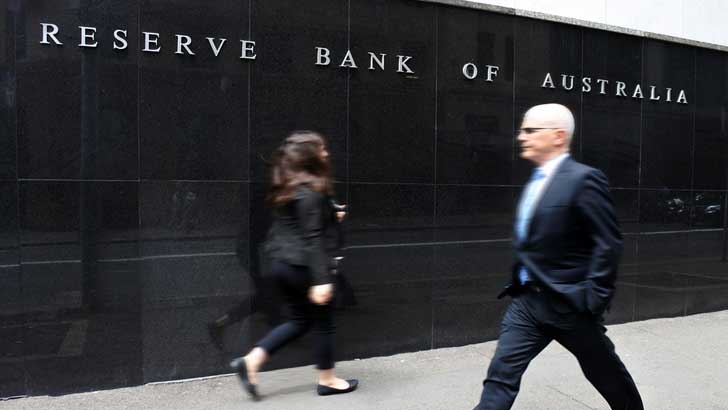
Reserve Bank of Australia (RBA)
The Reserve Bank of Australia (RBA) is Australia’s central bank and banknote-issuing authority.
Retail superannuation fund
Retail super funds are run by financial institutions for profit, often with a wide range of investment options. They typically charge higher fees and may include adviser commissions.
Return on Equity (ROE)
Return on Equity (ROE) is a measure of financial performance calculated as net income divided by equity.
Return on Investment (ROI)
Return on Investment (ROI) is a performance measure used to evaluate efficiency of an investment.
Software as a service (SAAS)
Software as a service (SaaS) is a distribution model used to license and deliver software applications over the internet.
Superannuation guarantee (SG)
The super guarantee (SG) is the minimum amount of super employers must pay to their employees. The SG is currently 11.5% and will increase to 12% by 2025.
Small and medium-sized enterprise (SME)
Small and medium-sized enterprises (SMEs) are businesses with a relatively small numbers of employees and lower revenue compared with large corporations.
Self-managed super fund (SMSF)
A self-managed super fund (SMSF) is a private financial structure for saving for retirement.
Society for Worldwide Interbank Financial Telecommunication (SWIFT)
The Society for Worldwide Interbank Financial Telecommunication (SWIFT) is a global messaging network used by banks and financial institutions to securely send and receive information about financial transactions.
Tax file number (TFN)
A tax file number (TFN) is a unique number issued by the Australian Taxation Office (ATO) to individuals and organisations.
Term account
For an investor, a term account generally refers to a structured investment in a loan or credit facility with a fixed maturity date, where the investor provides capital to a borrower (usually a private company) and earns returns over a defined period. Private credit term accounts are not guaranteed under the Australian Government’s Financial Claims Scheme (FCS).
Term deposit (TD)
A term deposit is a type of savings account offered by banks and financial institutions where you deposit a fixed amount of money for a set period of time (the “term”) at a predetermined interest rate. Term deposits are guaranteed under the Australian Government’s Financial Claims Scheme (FCS), provided they are held with an Authorised Deposit-taking Institution (ADI).
Total and permanent disability (TPD)
Total and permanent disability (TPD) insurance cover pays a lump sum if you become totally and permanently disabled.

Transition to Retirement (TTR)
Transition to Retirement (TTR) is a strategy allowing access to super while still working.
Vocational education and training (VET)
Vocational education and training (VET) provides workplace skills, technical knowledge and qualifications for rewarding jobs and careers.
Work health and safety (WHS)
Work health and safety (WHS) refers to regulations, policies and practices that ensure the health, safety and welfare of employees in the workplace.
Wage price index (WPI)
The wage price index (WPI) measures changes in the cost of wages and salaries over time in Australia.


 Etsy, Inc. ETSY
 Pinterest, Inc. PINS
 SQSP
SQSP Mercadolibre Inc. MLB1.SG
 Intuitive Surgical, Inc. ISRG
 Walt Disney Company (The) DIS
 Berkshire Hathaway Inc. BRK-A